Trajanovski: “The opening of the 26 km long Gradsko–Drenovo expressway reduces the travel time to Prilep, Bitola, and Resen!”

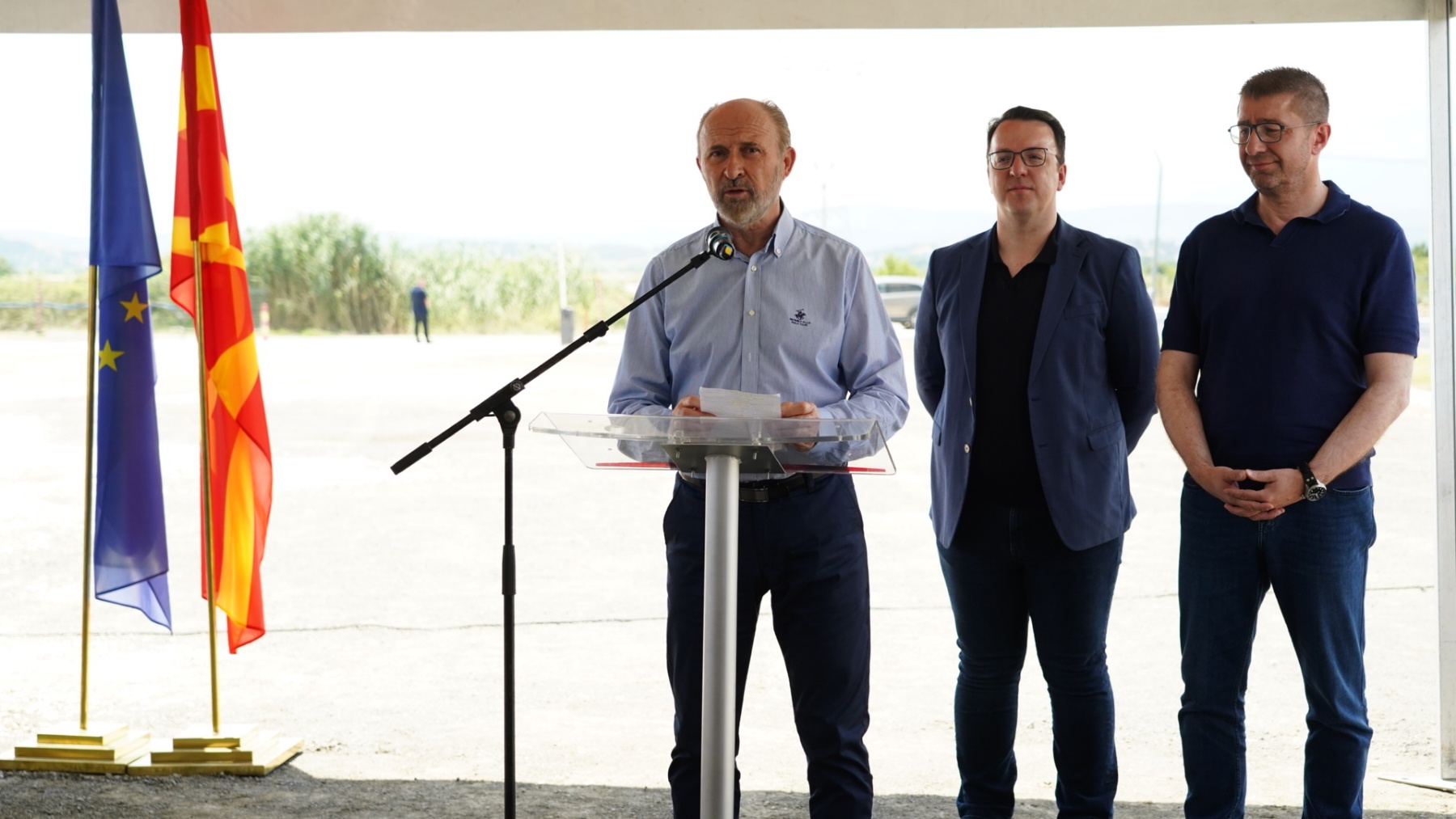
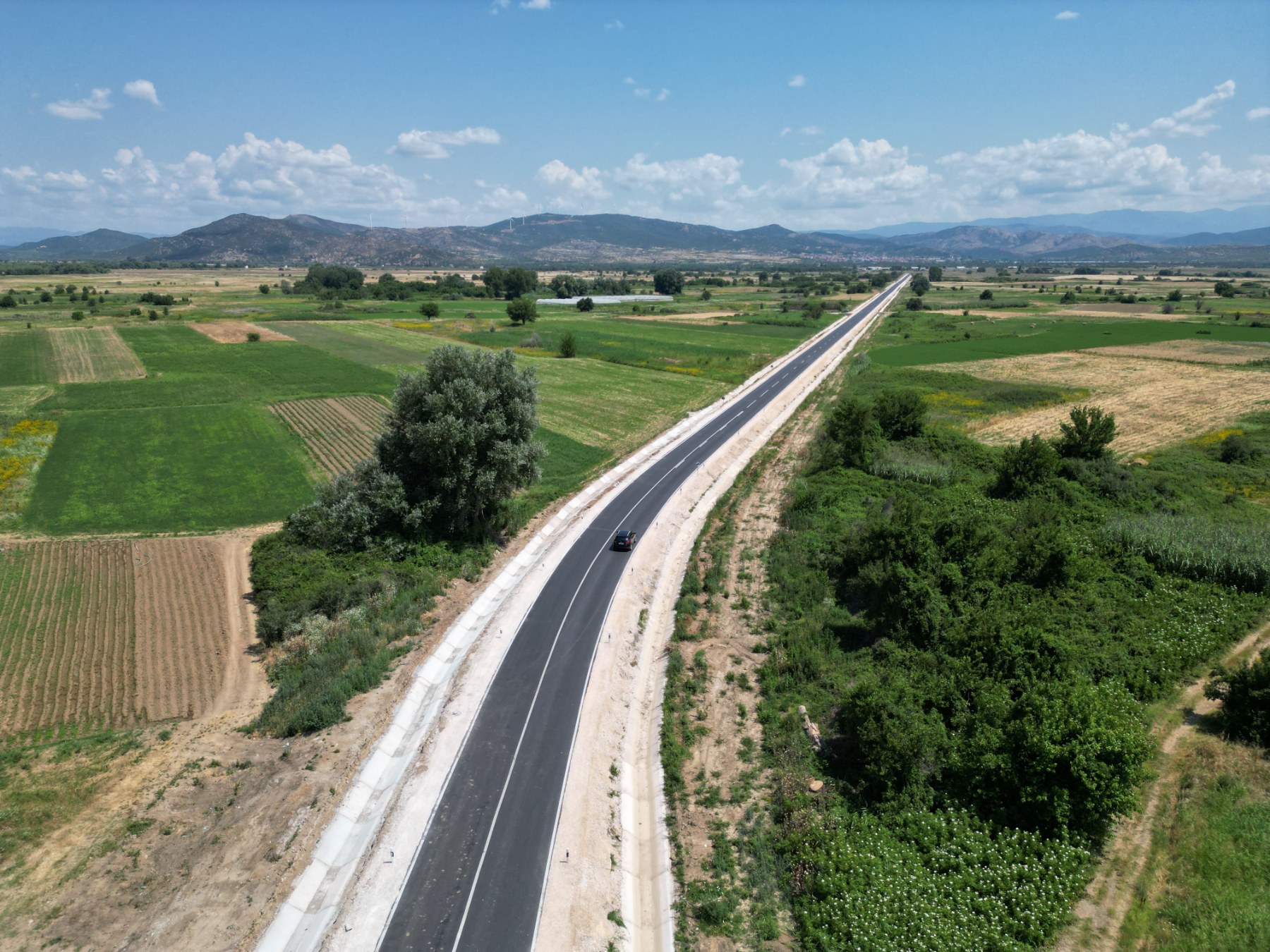
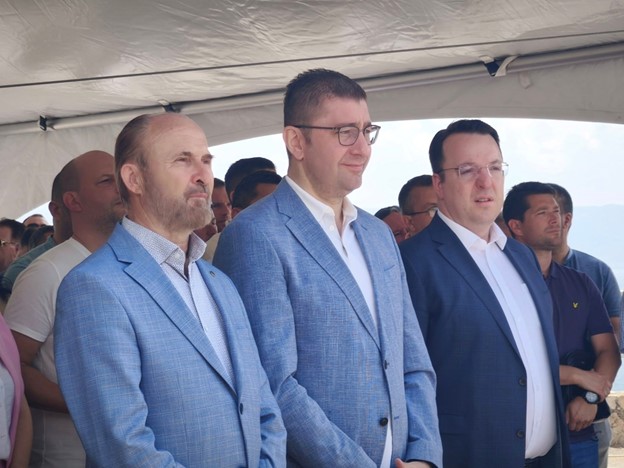
The Director of the Public Enterprise for State Roads, Koce Trajanovski, in the presence of the President of the Government of the Republic of North Macedonia, Hristijan Mickoski, the Minister of Transport Aleksandar Nikolovski, mayors, members of parliament, collaborators, and numerous guests, inaugurated the Farish–Drenovo section, part of the A1 Gradsko–Drenovo expressway, thereby completing a 26 km expressway segment on Corridor 10d.
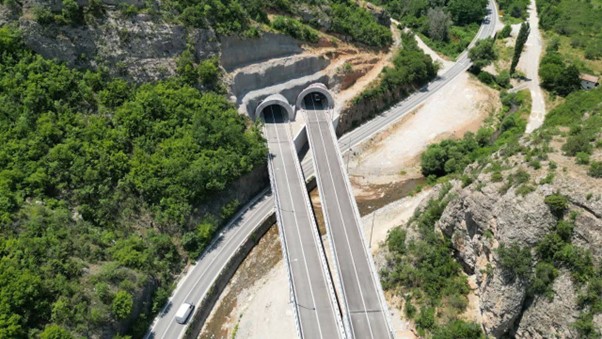
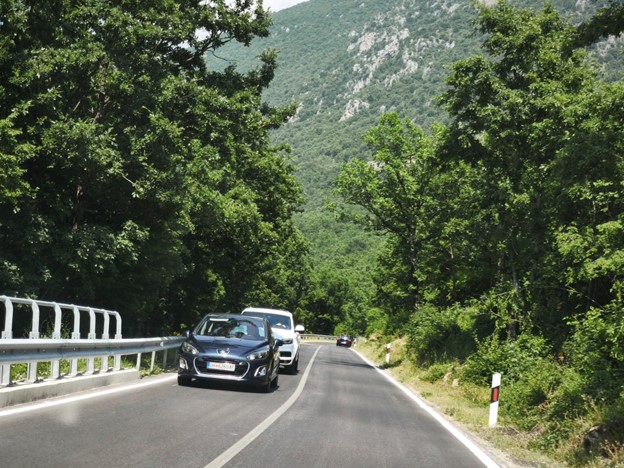
“Today I feel immensely proud and content as we open the Farish–Drenovo section of the A1 expressway, part of Corridor 10d. We managed to sort out the inherited problems and, in a short time, deliver a functional 26-kilometer section that significantly reduces the travel time from Gradsko to Prilep, Bitola, Resen, and beyond. We made exceptional efforts on the Farish–Drenovo section to overcome the obstacles for construction activities, especially in stabilizing dangerous rocks and accelerating the works. In just 10.2 km, we have 1 tunnel with dual tubes, 21 bridges, 11 retaining walls, 1 viaduct, 7 reinforced concrete structures, numerous underpasses, pipe culverts, and 1 roundabout on the existing road with the Drenovo interchange. Peripheral channels were constructed, river regulation was carried out in several sections, slopes were protected, safety barriers were installed, as well as horizontal and vertical signage and other road equipment,” said Koce Trajanovski, Director of the Public Enterprise for State Roads.

The project has a total value of €44.74 million and is financed by a loan from the EBRD (European Bank for Reconstruction and Development). The section was designed by Prostor DOO Kumanovo, the Contractor was Sinohydro Corporation Limited Beijing, PR China, Skopje Branch, and the supervision was provided by GEING and Euro Consulting.
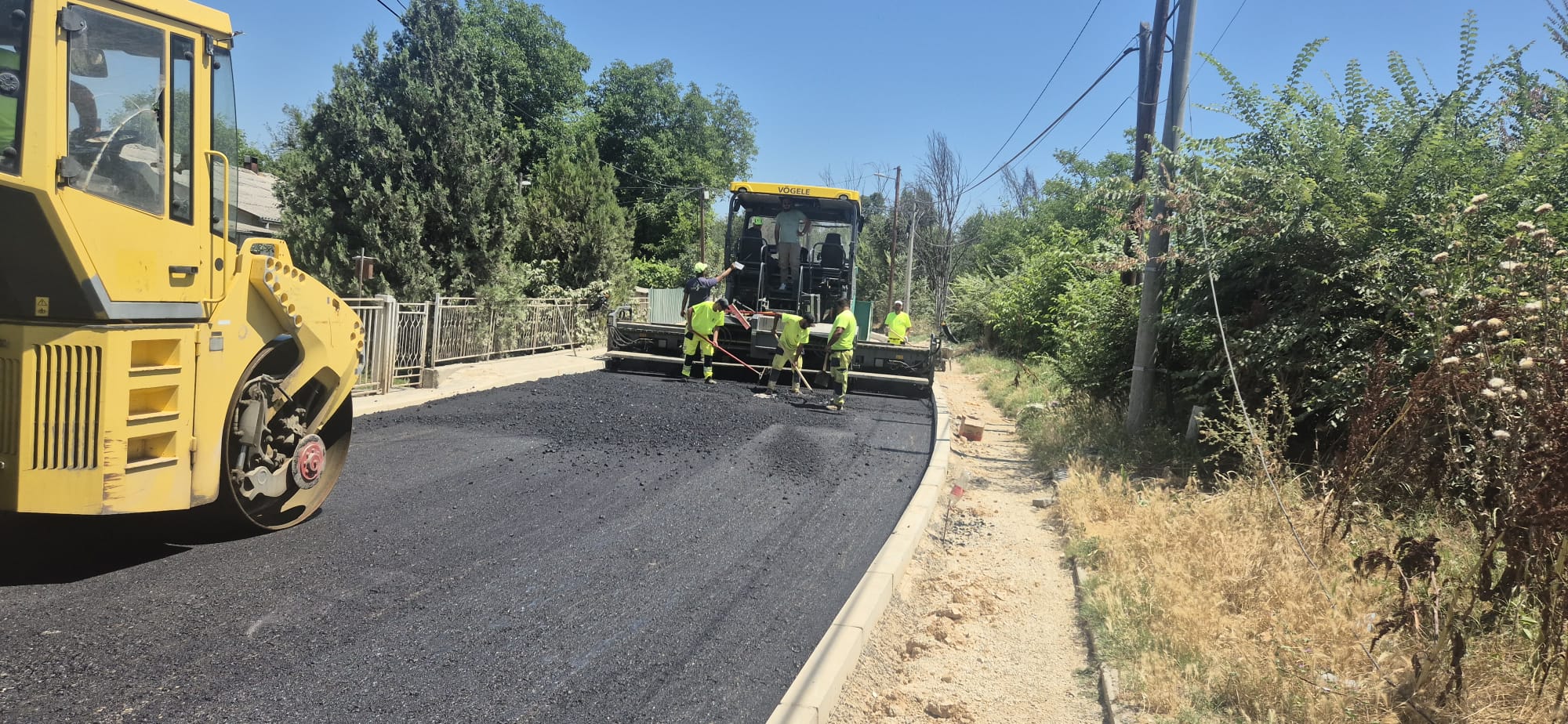
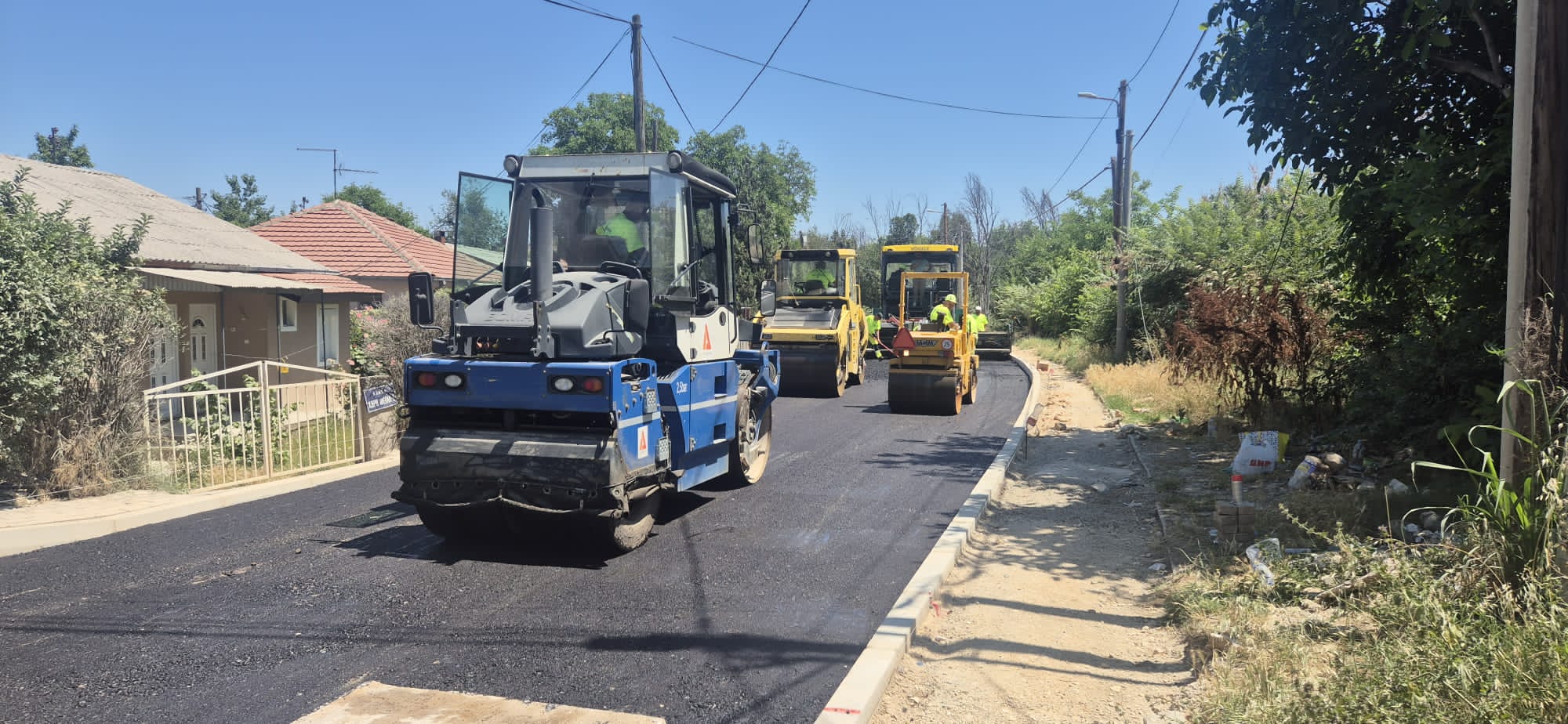
 

PESR: Asphalt Works Begin on the Road from Drachevo to Dolno Lisiche

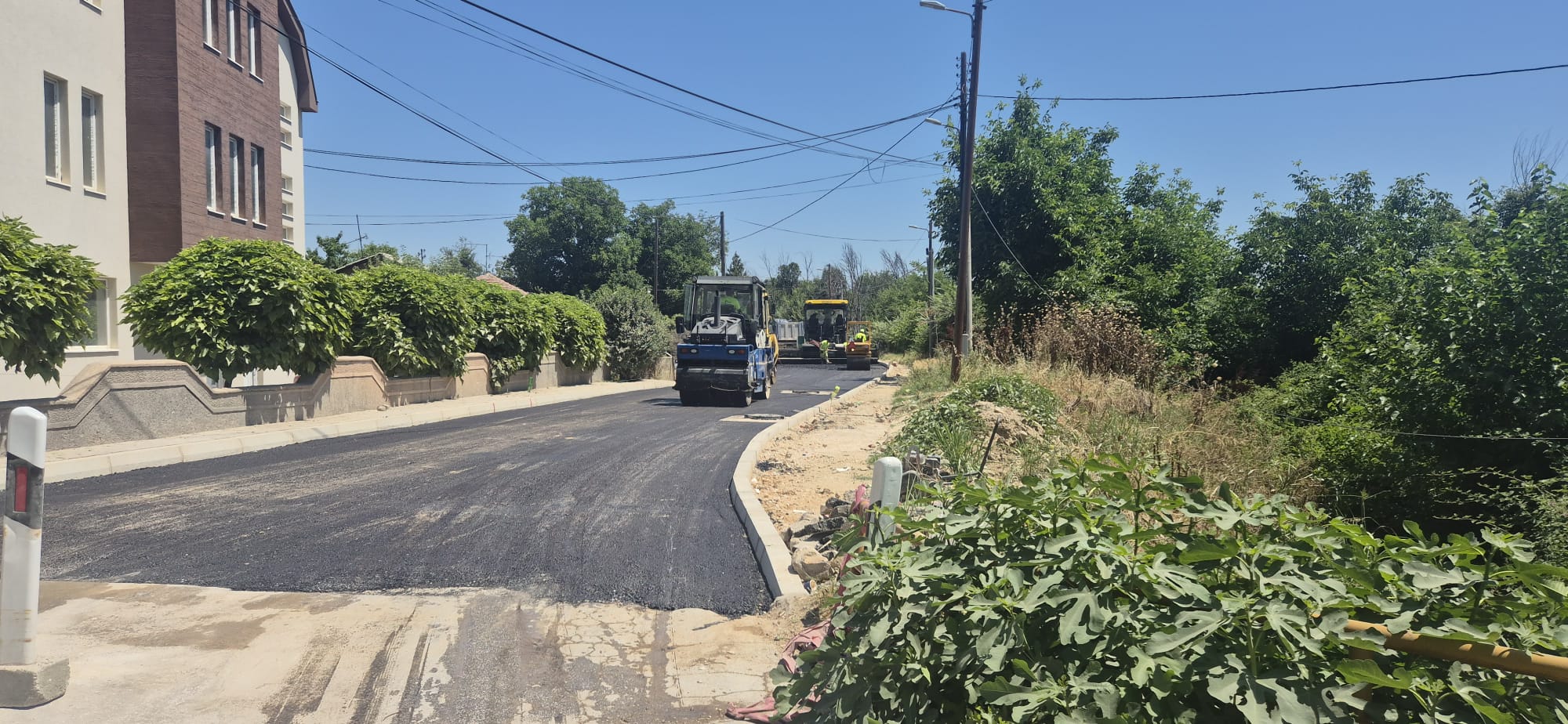
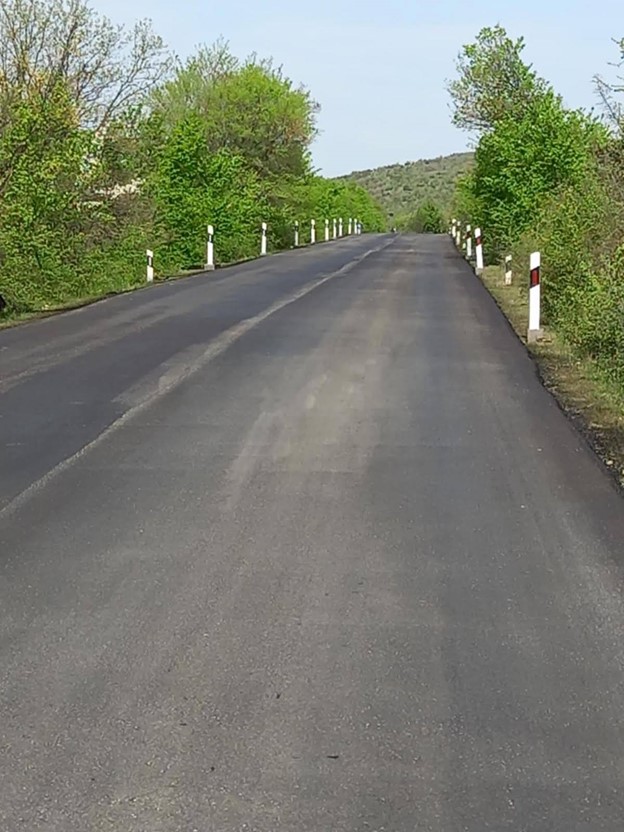
Today, asphalt laying works began on road R2134 from Drachevo toward Dolno Lisiche, and are expected to be completed within three days.

The contractor for these works is the Public Enterprise for Maintenance of Main and Regional Roads (Makedonijapat), and the total investment is 19 million denars, financed by the Public Enterprise for State Roads (PESR).

In addition to the carriageway reconstruction, the Municipality of Kisela Voda previously had the underground infrastructure and sidewalks reconstructed. Together, these improvements provide for significantly enhanced traffic and pedestrian conditions along this route.

Once the reconstruction is complete, citizens will benefit from a modern, safer roadway, featuring greatly improved driving conditions and increased road safety.

Trajanovski: “On-time completed reconstruction and expansion of the section Ponov Most – Bogdanci entrance, as part of the regional road R1109”

Works on the reconstruction and widening of the section from Ponov Bridge – Bogdanci entrance, part of regional road R1109, began in June 2024 with a completion deadline of 12 months, which was fully met as per the contract.

The Director of the Public Enterprise for State Roads, Koce Trajanovski, in the presence of the Prime Minister of the Republic of North Macedonia, Hristijan Mickoski, the Mayor of the Municipality of Bogdanci, Blazhe Shapov, and numerous guests, officially opened the reconstructed section.

“The reconstruction of this 4.83 km long section included widening of the road and its geometric elements improved—from 5.70 m (5.90 m) to 6.60 m asphalt carriageway width, with shoulders of 1.30 m, berms and gutters of 0.50 m, making the total road width now to be 9.20 m. The construction works were financed from the budget of the Public Enterprise for State Roads, totaling 303,646,570 denars, or approximately 5,000,000 euros. With the completion of this road, the regional road infrastructure is improved, enabling uninterrupted delivery of goods and materials, and enhancing both local and regional connectivity with the surrounding settlements,” stated Koce Trajanovski, Director of the Public Enterprise for State Roads.

A complete reconstruction of the road’s substructure was done, including the construction of a new subbase and a completely new superstructure with two asphalt layers. Due to significant damage to the bridge, a full rehabilitation was performed, including reinforcement of the central piers by increasing their cross-section, installation of appropriate waterproofing, and application of two asphalt layers. The structure was widened from 8.00 m to 9.20 m. A vehicle restraint guardrail and a new pedestrian barrier were installed. Additionally, a new leveling solution was implemented at the Stojakovo intersection, mechanically stabilized shoulders were constructed, concrete drainage channels were installed on both sides of the road, along with earth ditches. To ensure the safety of all road users, new horizontal and vertical signage was installed.

The works on the reconstruction and widening of the R1109 regional road section Ponov Bridge – Bogdanci entrance were carried out by Žikol, with project supervision done by EOS Skopje.


Trajanovski: “We are increasing the safety on the Ohrid – St. Naum main road. The reconstruction of the 24.4 km section is complete!”

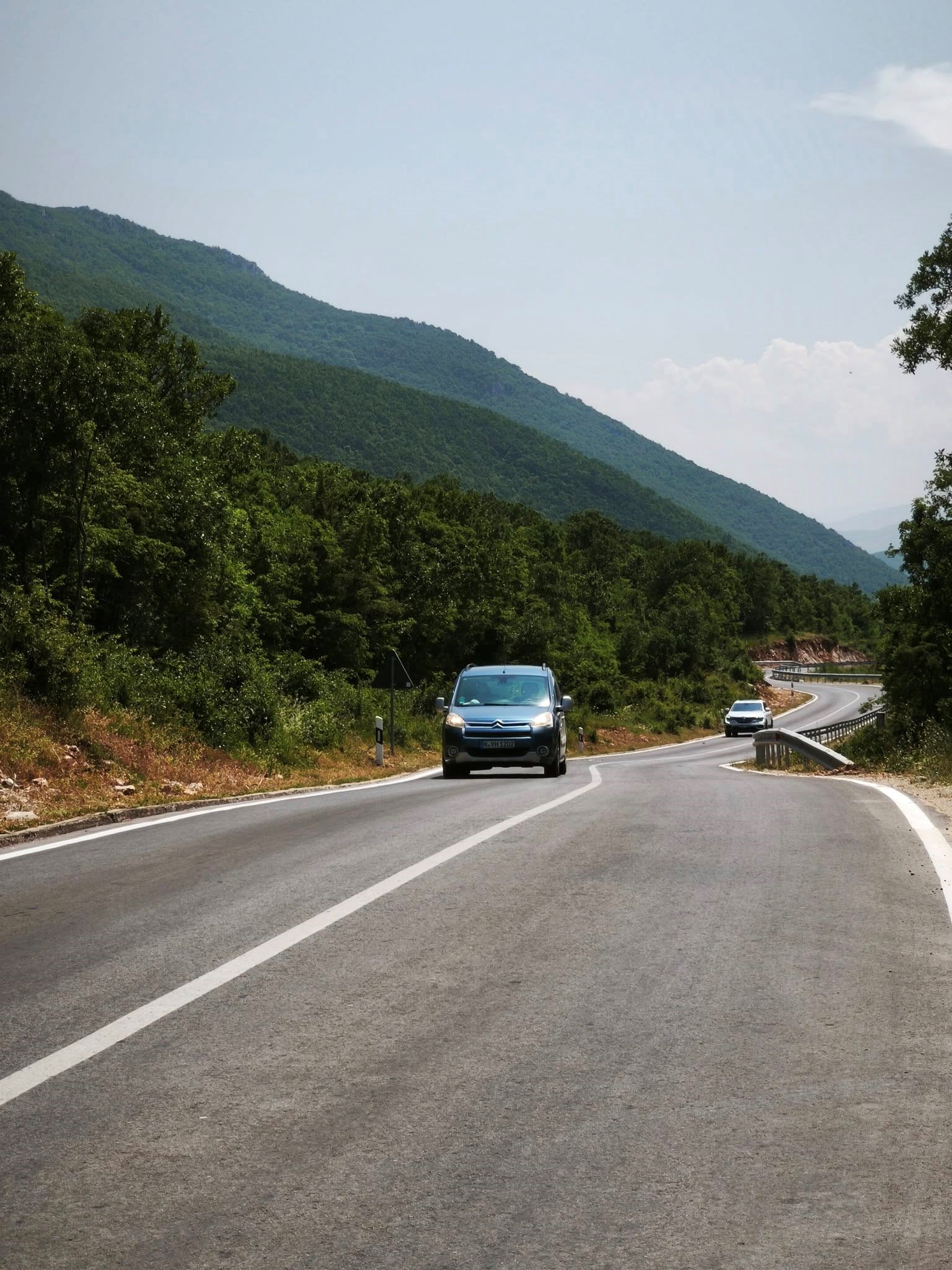
Rehabilitation of the 24.4 km long main road from Ohrid to St. Naum has been completed. This investment, worth €11.7 million, was financed with funds from the budget of the Public Enterprise for State Roads.
The Director of the Public Enterprise for State Roads, Koce Trajanovski, together with the President of the Government of the Republic of North Macedonia, Hristijan Mickoski, Deputy Prime Minister and Minister of Transport Aleksandar Nikoloski, Mayor of Ohrid Municipality Kiril Pecakov, and numerous guests, officially commissioned this important road section.

“We all recognize the importance and significance of this section, which is a main road of exceptional regional importance, as it serves as a road link with the Republic of Albania. Despite its strategic value, it has gone without rehabilitation for over four decades. Today, we proudly share the long-awaited news that this essential route has finally been renewed—news that will be welcomed not only by local residents who rely on it daily, but also by the many visitors drawn to the gem of the Ohrid coastline, the St. Naum complex. For all of them, we now offer a safer, rehabilitated main road,” said the Director of the Public Enterprise for State Roads Koce Trajanovski during the official commissioning.

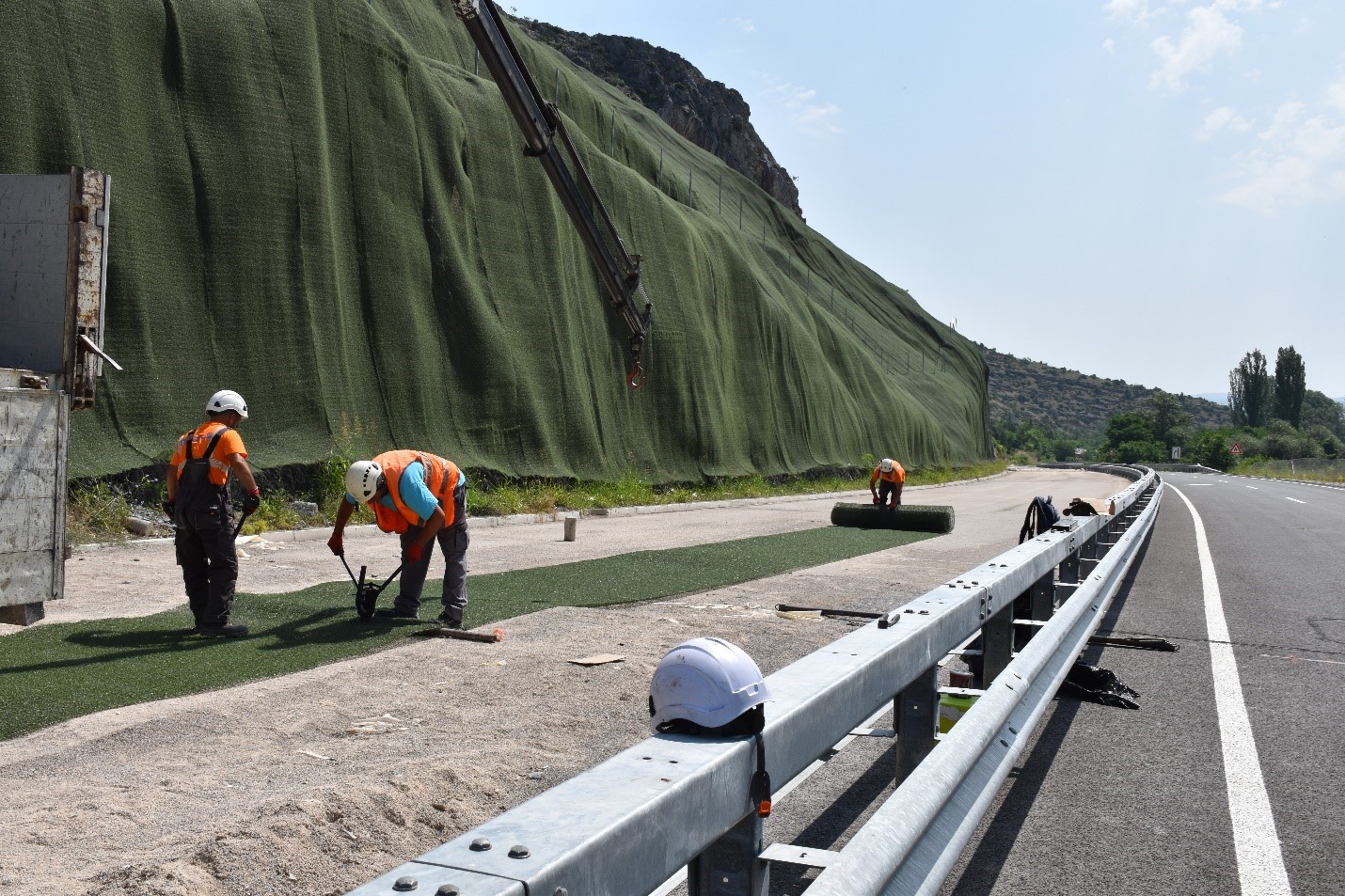
To improve traffic safety and road visibility with the reconstruction, slopes were unloaded by having unstable rock masses cleared and protective steel mesh installed on the slopes.
Entirely new vertical and horizontal signage was installed, i.e. new updated traffic signs and application of road markings by using high-durability road paint. Additionally, elastic guardrails were installed for enhanced roadside safety.

The width of the main road varies between 5 and 6 meters. To improve visibility and traffic safety, as well as to protect the slopes from rockfalls and landslides, slope stabilization and clearing of unstable rocky material were carried out.
The rehabilitation of this key tourist traffic route significantly enhances road safety and ensures a reliable, high-quality connection between Ohrid and the St. Naum monastery complex. It also improves the road network, boosts the quality of the tourism potential, and stimulates economic development in the Ohrid region.


Good Advancement in Hazardous Rock Removal Works on the Farish-Drenovo Expressway

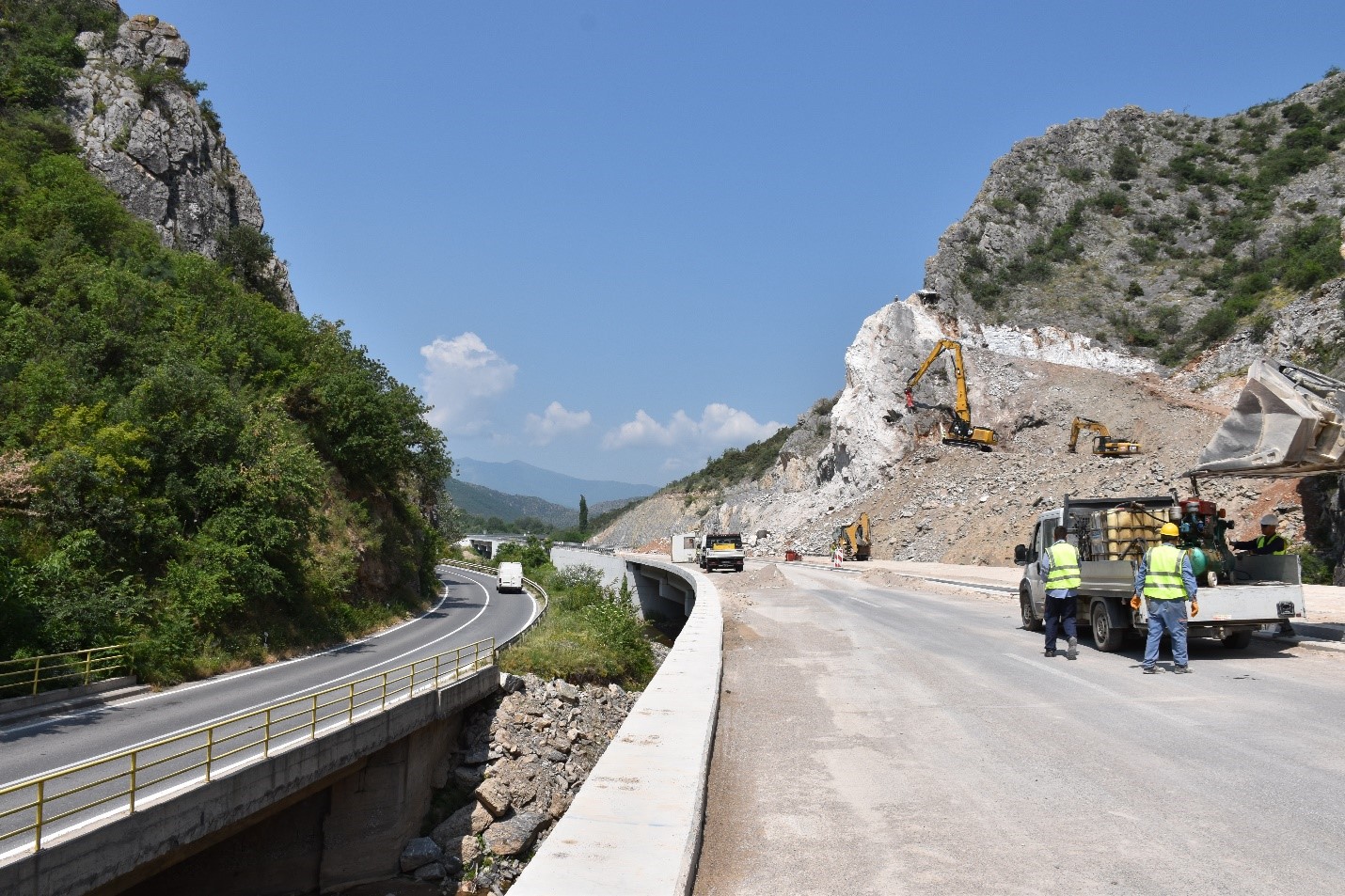
During construction works on the second phase of the Farish–Drenovo section of Gradsko–Drenovo expressway, cracks were observed in two about 70 meters high and dangerous rock formations. One of these rocks is located above an already constructed bridge on the left side, posing a potential risk of the bridge collapsing.

For this reason, the Public Enterprise for State Roads (PESR), together with the Contractor and the Supervision Engineer, undertook activities for remediation and stabilization of the slopes along the expressway route. These slopes are actively affected by erosion, which prompted a process for their easing so that they are stabilized, as well as implementation of active erosion control measures.

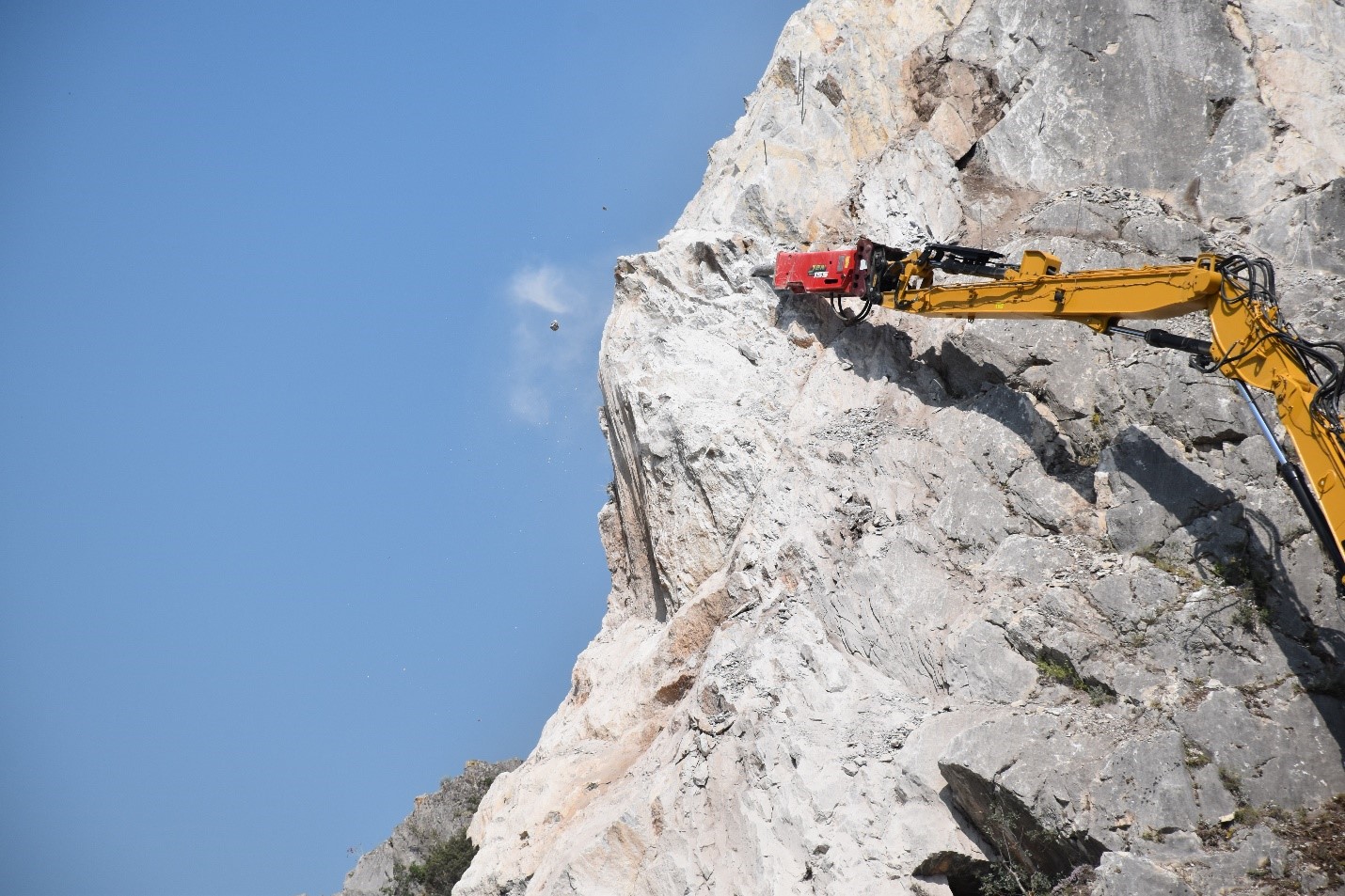
However, the rocks removing process is dangerous and risky, and therefore must be strictly controlled. The rocks are, namely, being broken down by removing small pieces layer by layer.

Considering that this is a very specific and uncommon process in road construction in rocky terrain, as is the area of the second phase of Farish–Drenovo expressway, we are bringing this operation closer to you both with images and in writing.

To break the dangerous rocks, specific machines and devices are used that apply hydraulic pressure to expand a fitting placed in a drilled hole, creating tensile fractures in the rock.

These machines are generally used in places where blasting is not permitted, as is the case here.

The rock fragments are carefully let down onto the road to avoid damage, and once the breaking is complete, a protective fence will be installed to prevent small fragments from falling onto the bridge.
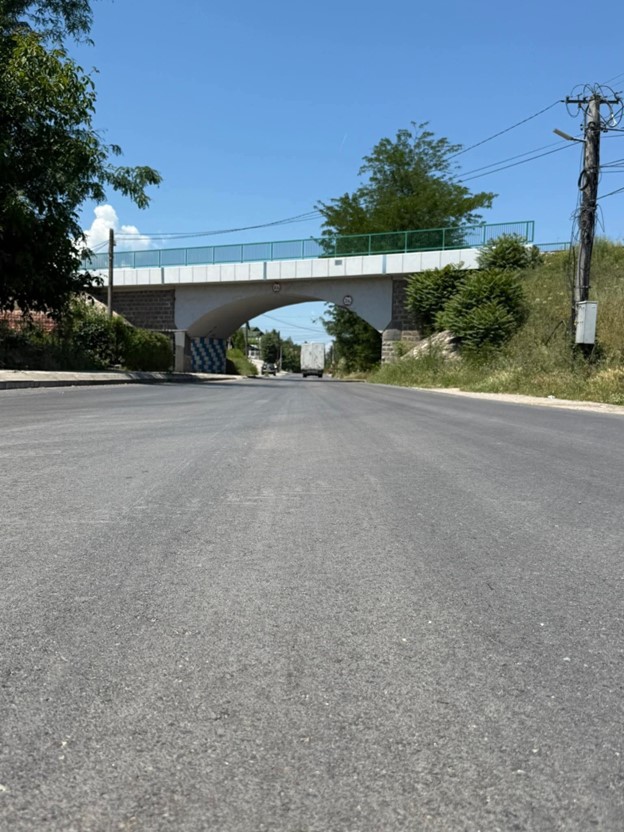
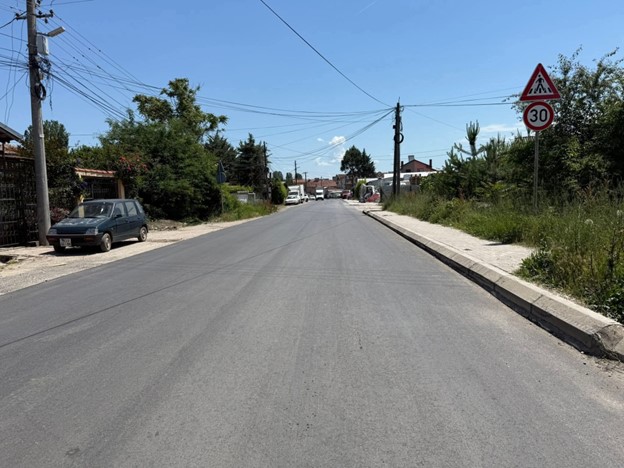
One of the rocks has already been safely removed, and the process of installing a protective net is underway. The other location is the one you see here, where work is progressing slowly due to the high risk involved.

Specifically, the rock is positioned 55 meters above the bridge, and workers are lifted using telescopic cranes onto safety platforms anchored on the secure side of the rock. Throughout the operation, they are secured with safety harnesses.

PESR: Construction works on R1104 transit Kumanovo completed

The Public Enterprise for State Roads, in cooperation with the PE for Maintenance and Protection of National and Regional Roads (Makedonijapat) and the Municipality of Kumanovo, have completed the construction works on the rehabilitation of a part of the regional road R1104 transit Kumanovo (Nikola Tesla Street).

The rehabilitated road is 1.4 km long and with a variable width of 6.5 to 9 meters, or about 10,000 m2 in total. Additionally, the Municipality of Kumanovo has rehabilitated both the water supply and sewage networks on this part of the regional road.

20 million denars were allocated for the rehabilitation, provided through the Annual Program for Maintenance and Protection of State Roads of the PESR and PE Makedonijapat.

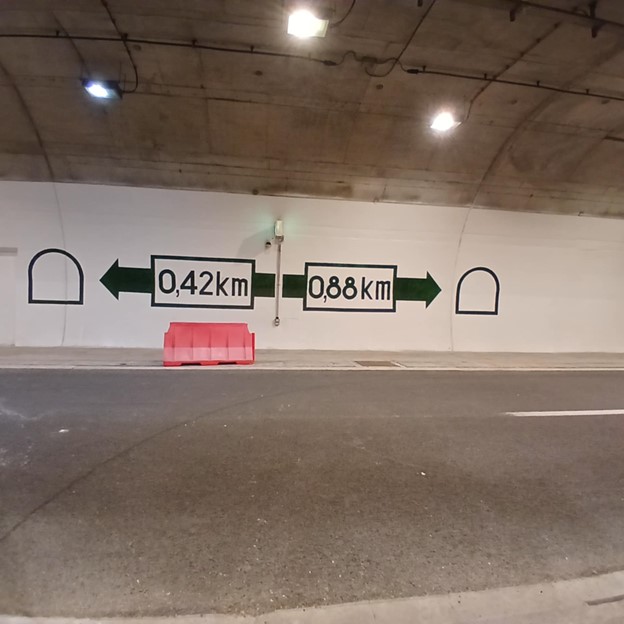
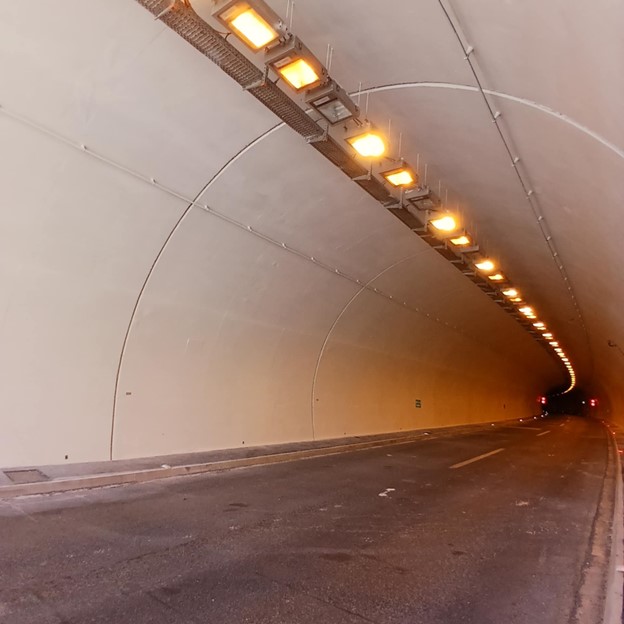
Early Completion of the Rehabilitation of the Demir Kapija 1 and 2 Tunnels on the Demir Kapija – Smokvica Section, Part of the A1 Motorway

This weekend, on Saturday, May 31, 2025, the Public Enterprise for State Roads reopened to normal traffic the Demir Kapija–Smokvica section, where rehabilitation was performed on the Demir Kapija 1 and 2 tunnels, part of the A1 motorway.

The contractor, Sintek Engineering, under the supervision of GEING, completed the tunnel rehabilitation ahead of the deadline. They performed several construction activities that gave the tunnels a modern and contemporary appearance.

The works included painting, replacing all non-functional lights, checking the control panels, and lighting in the SOS call booths and substations within the tunnel, as well as verifying the functionality of all cameras inside and outside the tunnels.

With the completed rehabilitation of the Demir Kapija 1 and 2 tunnels, we have increased the safety of all traffic participants.

Trajanovski: “Excellent Progress of the Rehabilitation of the Vardar River Bridge near Bashino Selo”

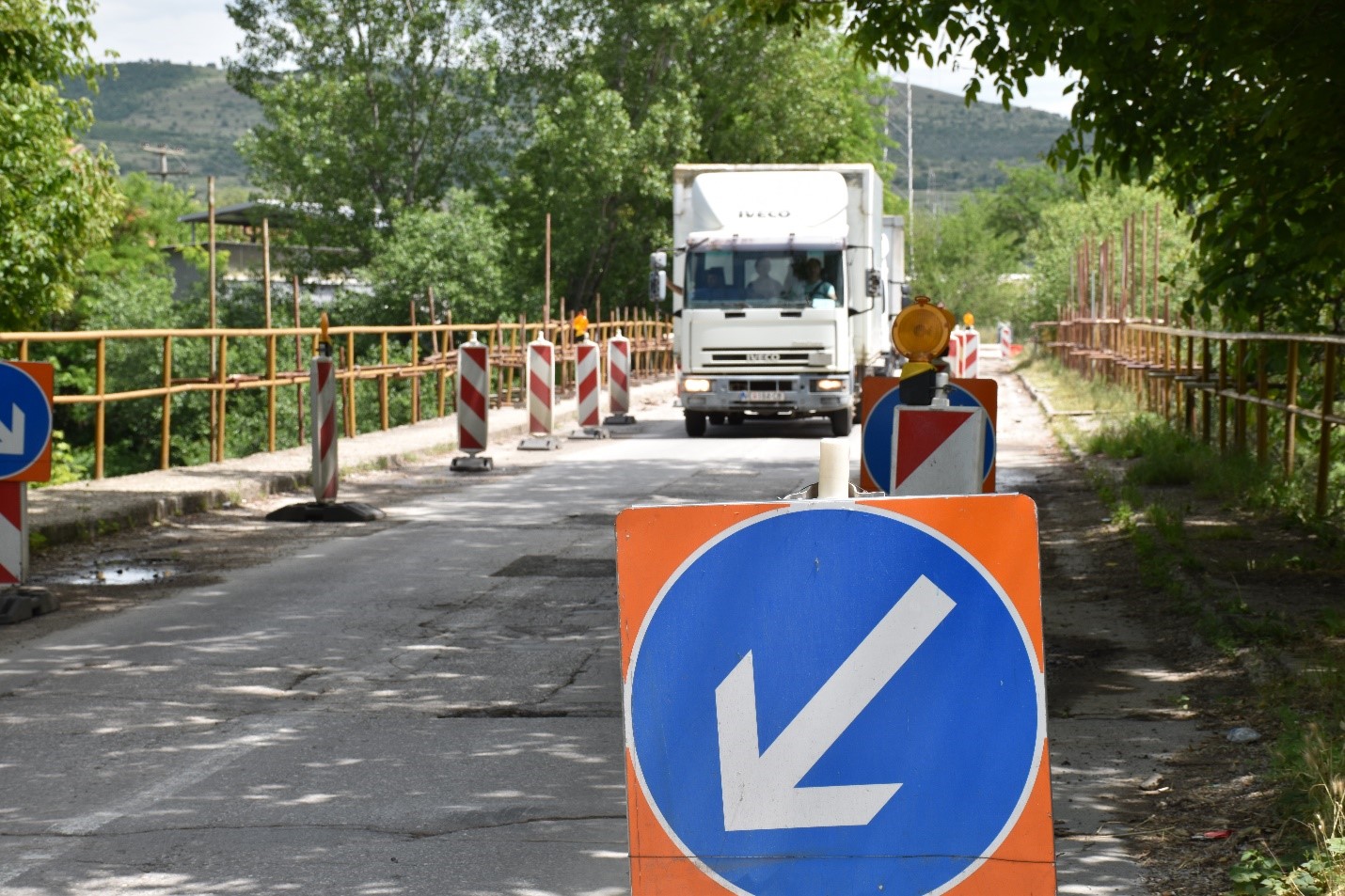
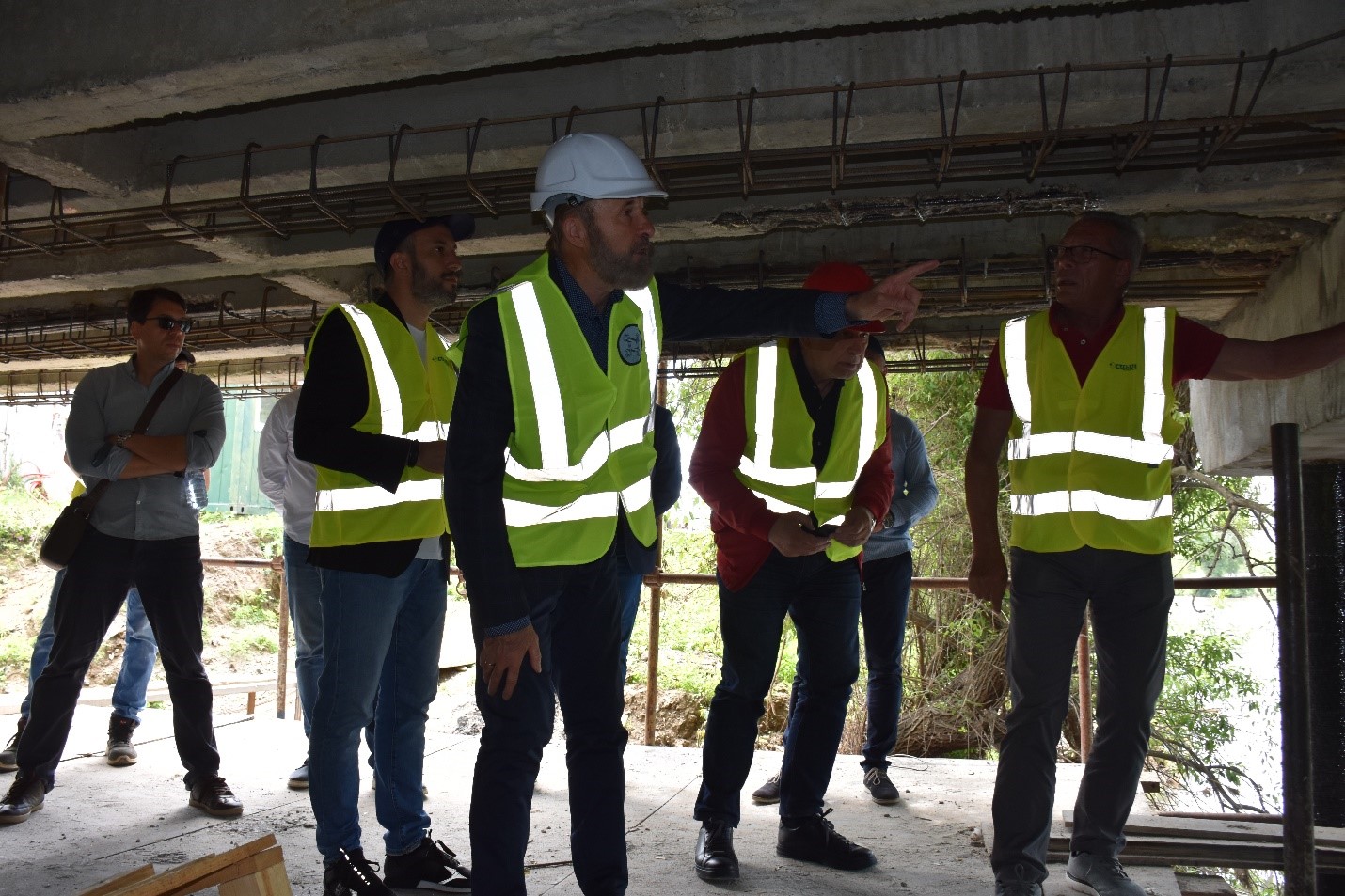
The bridge over the Vardar River near Bashino Selo, built back in 1971, has endured for decades with visible damage that posed a danger to the lives of those who use it daily or periodically. It was temporarily closed and later reopened under a temporary traffic regime. Since March 21, it has been undergoing rehabilitation. For this reason, the Director of the Public Enterprise for State Roads (PESR), Koce Trajanovski, went for an on-site inspection of the rehabilitation activities together with the Mayor of Veles Municipality Mr. Kolev, Members of Parliament Zdravkovski and Jamalov, and the Dean of the Faculty of Civil Engineering, Prof. Markovski.

“We have all come here together to check the rehabilitation activities progress on the spot. We are witnessing that the contractor ‘Sintek Engineering’ Skopje is working intensively, and our expectations are that the works will continue smoothly as they have so far and that everything will be completed by June 21 this year, as per the contract. This bridge connects Veles, Čaška, Izvor, and Bogomila—several populated areas—and is of vital importance due to the high traffic volume, including trucks, light freight vehicles, vans, and cars. Unfortunately, it has had visible damage for a long time. Upon our request for expert advice from the Faculty of Civil Engineering, we were instructed to close it and urgently rehabilitate it. After two months of traffic ban, the bridge was reopened, but traffic is allowed only on the middle lane, where the damage is the smallest, and is regulated by traffic lights on both sides. There is a ban for vehicles heavier than 40 tons, and police officers from the department of the Ministry of Internal Affairs in Veles regulate the movement of heavy trucks. We are grateful to them for their assistance and cooperation. I also thank the professors from the Faculty of Civil Engineering in Skopje who helped to have a state-of-the-art monitoring equipment installed under the bridge, that monitors and records every crossing 24/7.” – said PESR Director Koce Trajanovski during the inspection.

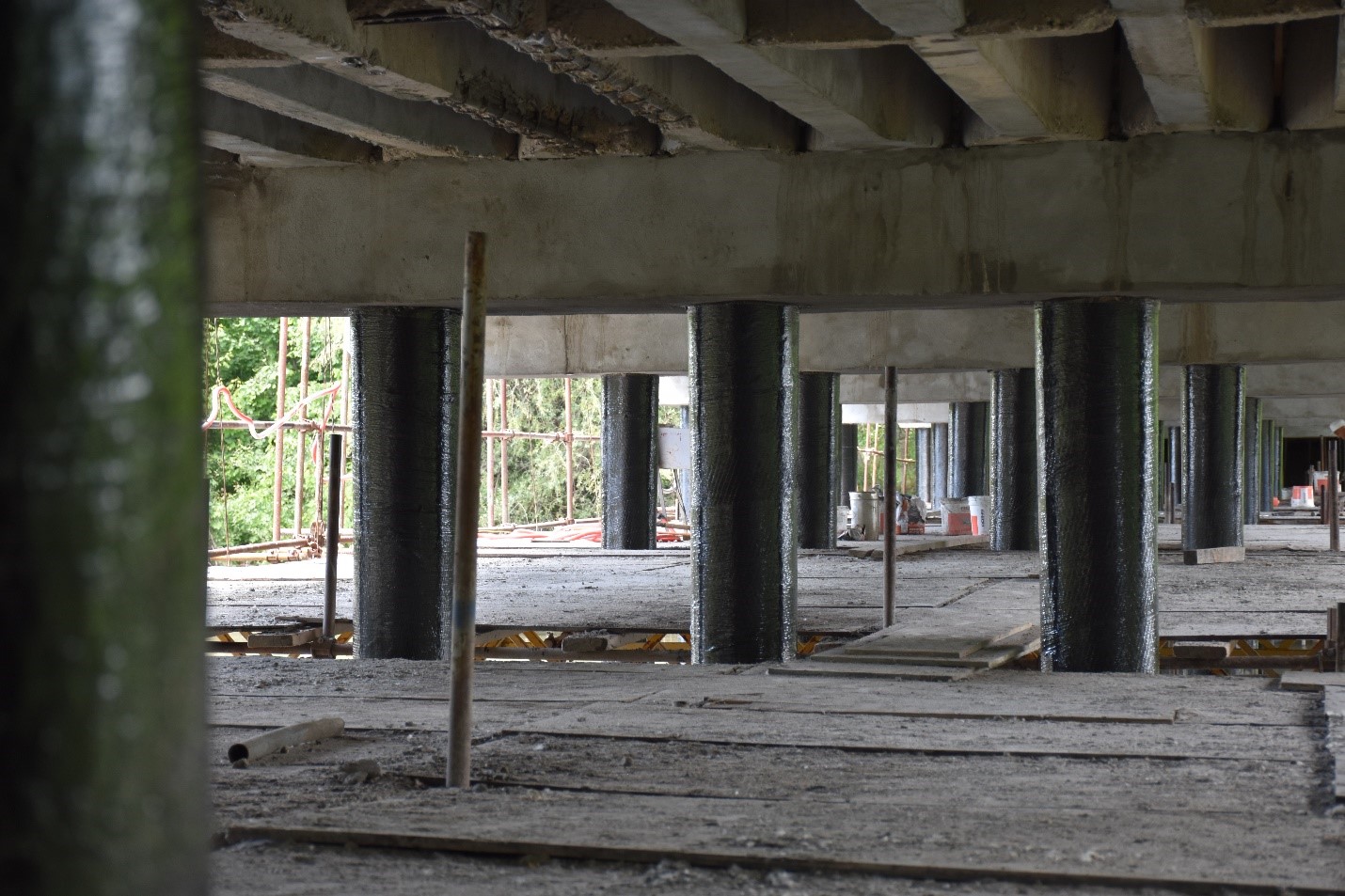
The contractor reported that the rehabilitation works include treating the underside of the bridge, applying a new type of material to the beams for their reinforcement, and using modern solutions to treat the interior of the bridge structure. So far, the beams with carbon strips have been completed, and the top protection—coating with epoxy resin—has also been finished. A special repair mortar is being applied, and the next steps include reinforcing the damaged main girders and having their underside re-concreted and strengthened. The contractor will also begin installing steel elements to reinforce the beams by adding steel connections, which will further strengthen the bridge structure.

This reconstruction is financed by PESR, i.e., the Government, and the project value is 24,614,554 denars or around 400,000 euros excluding VAT. The rehabilitation of the bridge near Bashino Selo is expected to initially extend its service life by 5 to 10 years.

Repair of Road Surface Depressions on the Veles – Gradsko Motorway Section

The Public Enterprise for State Roads informs that repair works have started on uneven road surfaces along Corridor 10 to improve traffic safety, especially as traffic increases significantly ahead of the summer and holiday season, when our country becomes one of the main transit routes for a large number of foreign tourists.

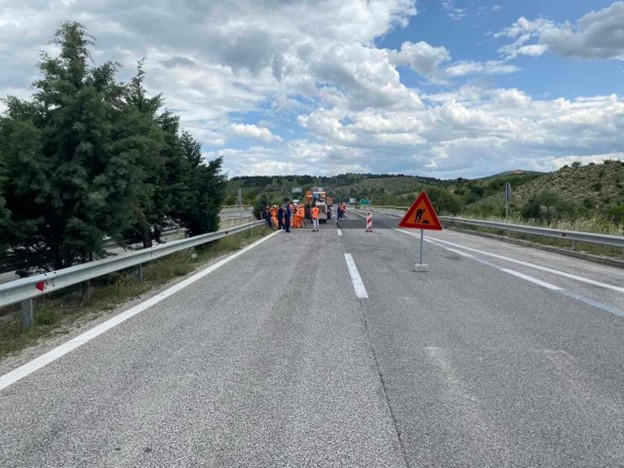
In this regard, the Public Enterprise for State Roads has tasked the Public Enterprise for Maintenance and Protection of Regional and Main Roads “Makedonijapat” to intervene and begin repairs on the uneven surfaces of the motorway section Veles – Gradsko, specifically on the bridge after the “Dadi” petrol station. The repairs will be performed on both sides of the bridge—entry and exit—and potholes will also be repaired.

We are herewith informing the public that we have previously repaired uneven surfaces on part of the regional road Furka – Dojran, and today, repairs will also be carried out on the road Gostivar – Straza, specifically on the exit leading to Mavrovo. These construction works are also being carried out by the Public Enterprise for Maintenance and Protection of Regional and Main Roads “Makedonijapat.”

The Public Enterprise for State Roads appeals to all traffic participants on the aforementioned road sections to drive carefully and respect the road markings and traffic signs.

Investing in new road infrastructure is of a great importance, but the maintenance of the existing road network is equally important.